Pourquoi cette salle compte
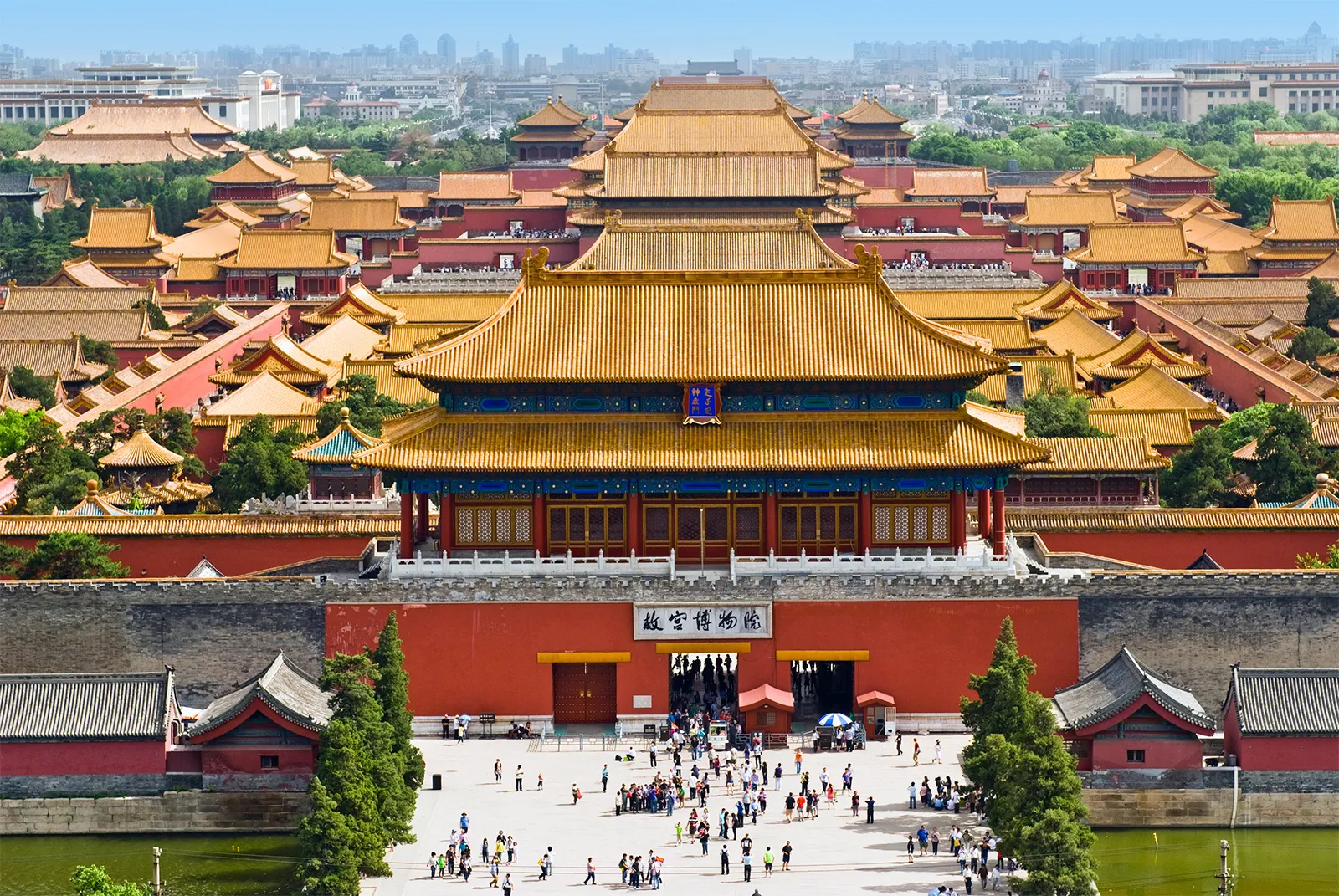
La Salle de l'Harmonie Suprême (太和殿, Taihedian) est le bâtiment que l'on imagine quand on dit « Cité interdite ». C'est la salle centrale, la plus vaste et la plus ornée de l'axe impérial — le lieu où l'empereur Yongle inaugura sa nouvelle capitale en 1420, où 24 empereurs Ming et Qing tinrent leur cérémonie de couronnement, et où les rituels d'État les plus lourds des dynasties tardives se déroulèrent. C'est aussi, en surface au sol, la plus grande salle en bois conservée du pays.
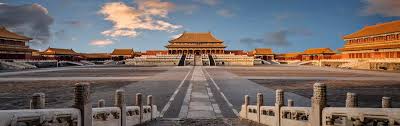
Pour les visiteurs, elle joue le rôle de centre dramatique de l'expérience. Vous passez Wumen, traversez la rivière des Eaux Dorées intérieures par l'un des cinq ponts de marbre, franchissez Taihemen, et Taihedian se dresse sur une terrasse de marbre à trois niveaux. La chorégraphie d'arrivée est délibérée — six siècles d'architecture impériale chinoise condensés en une révélation calculée.
Faits rapides
| Nom chinois | 太和殿 (Tàihédiàn) |
|---|---|
| Construit | 1406–1420, reconstruit plusieurs fois après incendies ; structure actuelle 1695 |
| Dimensions | 64 m large × 37 m profond × 35 m haut |
| Surface au sol | ~2 377 m² |
| Terrasse | Trois niveaux de marbre, 8 m au-dessus de la cour |
| Colonnes | 72 colonnes en bois ; six dorées autour du trône |
| Fonction | Salle du trône pour couronnements, mariages impériaux, audiences du Nouvel An, déclarations de guerre |
| Accès | Vue extérieure uniquement ; intérieur visible derrière les balustrades |
Chiffres architecturaux issus des publications du Musée du Palais et de la documentation UNESCO.
L'architecture — ce qu'il faut regarder
La terrasse de marbre à trois niveaux
La salle repose sur une plateforme de marbre à trois étages, haute de huit mètres, qui est elle-même une œuvre architecturale. La terrasse est ornée de 1 142 gargouilles en forme de tête de dragon (chiwen) qui évacuent les eaux de pluie lors des orages d'été. Photographiez ceci depuis l'angle sud-ouest — la lumière du lever attrape les balustrades sculptées.
Le toit — et ses figurines
Le toit à double auvent en tuiles jaunes vernissées, de type wudian, est réservé en architecture chinoise aux édifices du plus haut rang. Regardez le faîte du débord avant : une procession de figurines en céramique descend. La plupart des salles impériales en comptent neuf ; la Salle de l'Harmonie Suprême est le seul bâtiment de Chine à en avoir dix, dont une figure unique appelée hangshi — une infraction délibérée au protocole qui signale le rang suprême.
Les colonnes et le trône
À l'intérieur, 72 colonnes en bois soutiennent la structure. Les six qui entourent le trône sont dorées et sculptées de dragons enroulés. Le trône lui-même, le Trône du Dragon, repose sur un piédestal à sept marches. Au-dessus pend la voûte caisson — un dôme creusé et orné où un dragon enroulé serre une boule d'argent, élément nommé xuanyuan jing, censé tomber sur les usurpateurs. La légende veut qu'il soit tombé en 1915, conduisant Yuan Shikai à ne jamais s'y asseoir.
Symbolique des couleurs
- Tuiles jaunes — réservées aux édifices impériaux.
- Murs et colonnes rouges — fortune et pouvoir.
- Poutres bleues et vertes — éléments bois et eau pour protéger du feu.
- Terrasse de marbre blanc — pureté, élément métal.
Les cérémonies qui s'y sont déroulées
La Salle de l'Harmonie Suprême ne servait pas au gouvernement ordinaire — celui-ci se tenait dans des salles plus petites en arrière. Taihedian n'accueillait que les événements du plus haut rang :
- Couronnements de nouveaux empereurs.
- Mariages impériaux — l'impératrice était portée depuis le sud via Wumen.
- Anniversaire de l'empereur — présence complète de la cour, des milliers se prosternaient dans la cour.
- Audiences du solstice d'hiver et du Nouvel An.
- Annonces de guerre et de victoire.
- Résultats des examens impériaux de premier rang — les lauréats entraient par Wumen, honneur unique.
Les jours ordinaires, la salle était vide. L'empereur résidait dans la Cour intérieure et tenait les audiences matinales au Palais de la Pureté Céleste.
Comment vivre la salle aujourd'hui
Ce que vous pouvez et ne pouvez pas faire
L'intérieur est inaccessible. Les visiteurs observent le trône depuis les balustrades de l'entrée. Photographies de l'intérieur autorisées depuis ces balustrades, sans flash. La terrasse de marbre n'est accessible que par l'avant (sud) ; l'arrière (nord) sert de passage pour rejoindre la Salle de l'Harmonie Centrale.
Meilleurs spots photo
- Depuis la porte Taihemen vers le nord — l'angle carte postale, salle centrée sur la terrasse.
- Angle sud-est de la cour — lumière du matin sur la façade.
- Depuis les galeries latérales — profil des figurines de toit.
- Gros plan derrière les balustrades — caisson doré du plafond.
La réalité de la foule
À 9h30 en haute saison, attendez-vous à une foule de cinq rangs devant les balustrades. Trois options :
- Arriver à l'ouverture et filer vers Taihedian avant les groupes.
- Venir tard — la salle du trône se vide après 15h30 lorsque les groupes sortent.
- Sauter la vue intérieure et se concentrer sur la cour et la terrasse, qui rendent mieux à distance.
Astuce de la rédaction
La lumière à 8h45 mi-octobre frappe les colonnes avant à un angle bas et transforme la dorure du jaune à l'ambre. Dépassez la file du trône, faites la boucle, revenez — à 9h00 la couleur a déjà changé.
Les détails moins connus
- Historique des incendies. Brûlée et reconstruite au moins sept fois — la foudre fut la cause la plus fréquente jusqu'à la pose de mises à la terre en cuivre sous les Qing.
- Chaudrons de bronze. Dix-huit grands chaudrons (jīgāng) trônent dans la cour, toujours pleins d'eau pour prévenir les feux. En hiver, on allumait des braises dessous pour empêcher le gel.
- Cadran solaire et mesure de grains. Sur la terrasse, un cadran solaire en marbre et un jialiang (mesure de grain) — symboles du contrôle impérial du temps et des étalons commerciaux.
- Tortue et grue en bronze. Flanquent les marches avant — symboles de longévité. De l'encens montait de leur dos pendant les cérémonies.
- Rampe centrale sculptée. Une seule dalle de marbre de 250 tonnes ornée de dragons et de nuages. Tirée depuis une carrière à 70 km, en hiver, sur des routes glacées.
Comment la salle s'insère dans le parcours
Taihedian est la troisième salle au nord de Wumen, après Taihemen et les ponts. Prévoyez :
- 15–20 minutes pour la terrasse et l'extérieur.
- 10–15 minutes pour la file devant le trône.
- 5 minutes pour les chaudrons et la rampe.
Total : environ 30 à 40 minutes sans s'attarder, une heure avec des photos sérieuses.
Comparaison aux autres « plus grandes » salles
| Salle | Largeur × profondeur | Année | Matériau |
|---|---|---|---|
| Harmonie Suprême | 64 × 37 m | 1420 (actuelle 1695) | Bois |
| Harmonie Préservée | 50 × 25 m | 1420 | Bois |
| Pureté Céleste | 40 × 25 m | 1420 | Bois |
| Cité interdite (totale) | 961 × 753 m | 1420 | Bois, brique, marbre |
FAQ — Salle de l'Harmonie Suprême
Peut-on entrer dans la Salle de l'Harmonie Suprême ?
Non. Les visiteurs voient l'intérieur depuis les balustrades avant.
Pourquoi s'appelle-t-elle Salle de l'Harmonie Suprême ?
Les Qing l'ont rebaptisée depuis « Salle de la Suprématie Impériale » pour adoucir le message après 1644 ; « harmonie » renvoie aux idéaux confucéens d'ordre.
Quelle est sa hauteur ?
35 mètres avec le toit, sur une terrasse de marbre de 8 m — environ l'équivalent d'un immeuble de 11 étages depuis la cour.
Les figurines du toit sont-elles d'origine ?
L'ensemble actuel date de la reconstruction Qing tardive ; la configuration à dix figures est protégée depuis au moins 1695.
Le dernier empereur a-t-il été couronné ici ?
Oui — Puyi y fut inauguré en décembre 1908 à l'âge de 2 ans.