
Vad Förbjudna staden faktiskt är — och varför man köar
Förbjudna staden — officiellt Palatsmuseet (故宫博物院, Gùgōng Bówùyuàn) — var den kinesiska kejsarmaktens säte mellan 1420 och 1912. Tjugofyra kejsare från Ming- och Qing-dynastierna bodde, regerade och konspirerade innanför den 720 000 m² stora muromgärdade anläggningen. Idag är det världens största bevarade träpalatskomplex, UNESCO-världsarv sedan 1987 och ett av planetens mest besökta museer med över 17 miljoner besökare om året.
Det är också en av Pekings mest "lätt missförstådda" sevärdheter för turister. Området är enormt, biljettsystemet är helt digitalt och namnbaserat, fotoreglerna varierar från sal till sal, och vandringen söder–norr är enkelriktad. Den här guiden bygger på frågorna besökare faktiskt ställer oss — vad ska bokas, när ska man gå, vilken port används, vilka salar och trädgårdar är värda det extra steget.
Snabb orientering
- Plan: en 961 m lång rektangel i nord-sydlig axel, omgiven av en 52 m bred vallgrav och 10 m höga murar.
- Två halvor: Yttre gården i söder (ceremonier, statliga ärenden) och Inre gården i norr (kejsarens och familjens privata utrymmen).
- Byggnader: cirka 980 strukturer och omkring 8 700 rum enligt traditionell räkning.
- Samlingar: över 1,86 miljoner katalogiserade föremål, varav bara en liten del visas åt gången.
I praktiken hinner man inte se allt på ett besök. En vanlig biljett ger tillgång till centralaxeln, de stora yttre salarna, palatsen i Inre gården och Kejserliga trädgården längst i norr. Specialutställningarna — Skattgalleriet och Klockgalleriet i den östra delen av Det stillsamma långlivets palats — kräver oftast ett mindre tillägg.
Biljetter, priser och hur bokningen fungerar
Palatsmuseet säljer endast e-biljetter. Det finns ingen pappersbiljettkassa för det allmänna besöket. Varje biljett kopplas till en ID-handling eller pass — det är systemet med namnbokning, och porten skannar både QR-kod och dokument. Om namnet inte stämmer släpps du inte in.
Officiella priser vid publicering:
- Högsäsong (1 april – 31 oktober): vuxen fullbiljett 60 RMB.
- Lågsäsong (1 november – 31 mars): vuxen fullbiljett 40 RMB.
- Skattgalleriet: +10 RMB. Klockgalleriet: +10 RMB.
- Halvt pris: studenter med giltig legitimation, seniorer 60+ (gratis under vissa perioder), barn 6–18 år.
- Gratis: barn under 6 år eller under 1,20 m, i sällskap med betalande vuxen.
Källa: en.dpm.org.cn. Vi uppdaterar när museet meddelar förändringar; bekräfta på officiell webbplats eller bokningssida före resan.
Bokningen — där de flesta kör fast
Den officiella kanalen är Palatsmuseets WeChat-miniprogram och webbplats som kräver ett kinesiskt mobilnummer för SMS-verifiering. Det är den största stötestenen för utländska besökare. Lösningar:
- Boka via en auktoriserad partnerplattform. Klook, Trip.com med flera sköter namnregistreringen på svenska/engelska och skickar QR-koden via e-post. Lite dyrare än ren biljett men löser sig på fem minuter från hotellobbyn.
- Be din kinesiska guide boka åt dig. Lokala arrangörer är vana vid processen.
- Köp på plats i Wumens utländska passluckan samma dag om något inventarium finns kvar. Sällsynt vår och sommar — räkna inte med det.
Biljetter släpps sju dagar i förväg kl. 20.00 Pekingtid. Under toppveckor (maj, nationaldagen i oktober, vårfest) tar dagskvoten på 40 000 platser slut på minuter.
Öppettider och dagar att undvika
Tiderna är enkla men stängningarna lätta att missa:
- Högsäsong: 8.30 – 17.00. Biljettförsäljning till 16.00; sista insläpp 16.10.
- Lågsäsong: 8.30 – 16.30. Sista insläpp 15.40.
- Stängt varje måndag utom på nationella helger. Är måndagen helg flyttas stängningen oftast till tisdagen.
- Kinesiskt nyår och 1 oktober har hårda kvoter och köer från kl. 07.00 utanför Tiananmen.
Råd efter år av observation: kom till öppning, gå snabbt genom centrala salarna och vänd tillbaka till sidopalatsen före 10.30 när gruppvågen rullar in. Insläpp kl. 13.00 en solig majlördag betyder att du fotar tak över andras huvuden.
Komma in — portar, säkerhet och rutten
Enkelriktat:
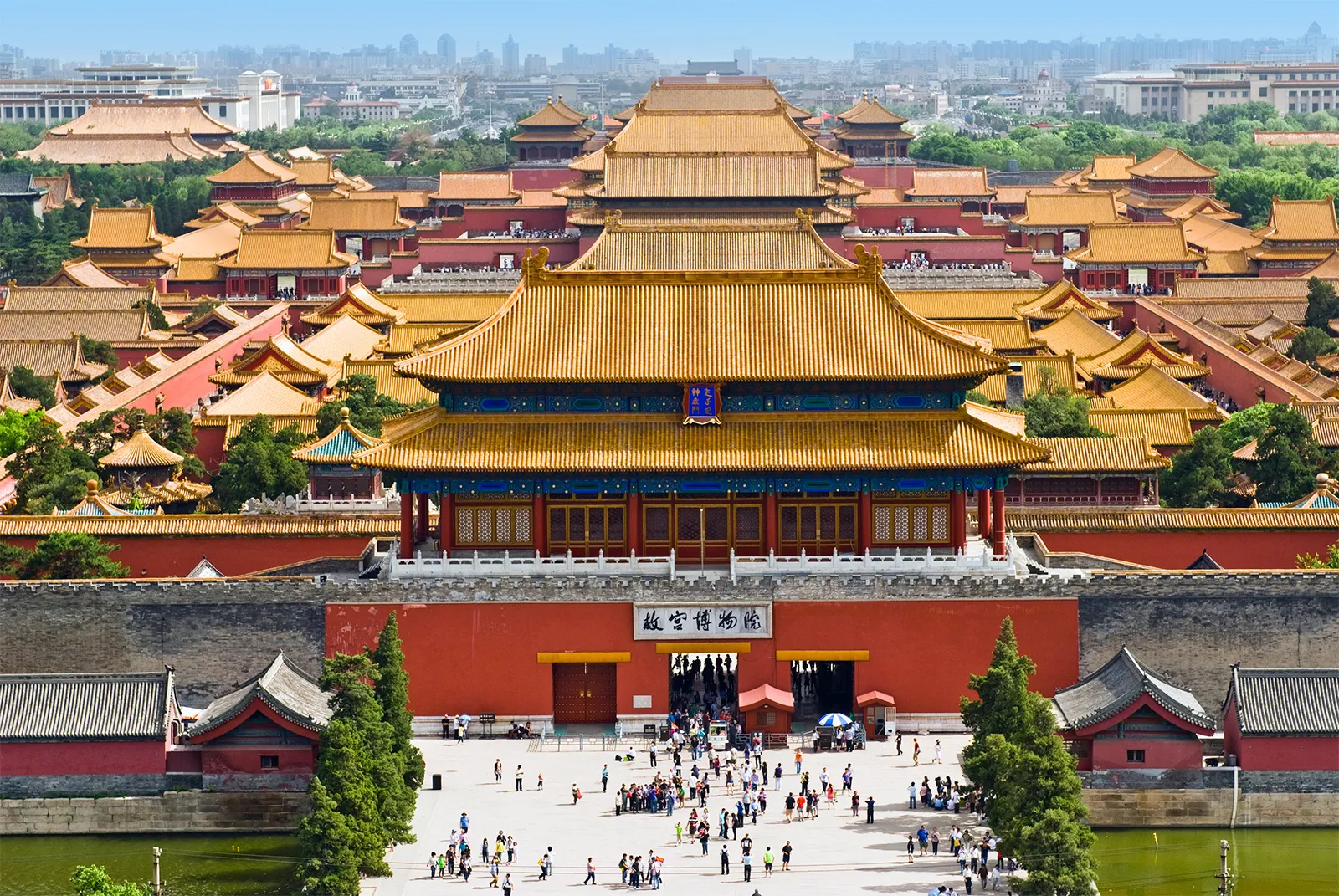
- Entré via Middagsporten (Wumen, 午门) i söder. Det är den enda entrén.
- Utgång via Den gudomliga maktens port (Shenwumen, 神武门) i norr, eller Östra välståndsporten (Donghuamen).
Du kan inte gå tillbaka söderut längs centralaxeln när du gått norrut. Planera därefter — lämna inte ryggsäcken hos en vän "nära entrén" i förhoppningen att ses där senare. Säkerhetskontrollen är flygplatsnivå: vätskor, tändare och stora stativ är begränsade.
"Hemligheten" om sidoingångar
Det finns ingen riktig hemlig ingång, men två praktiska tips de flesta missar:
- Utländska passpåren vid Wumen brukar vara kortare än kinesiska ID-spåren.
- Vid utgång släpper Donghuamen (öster) dig nära Wangfujing för lunch; Shenwumen (norr) är valet om du vill upp på Jingshan för det berömda fågelperspektivet.
Byggnader att prioritera på en halvdag
Har du tre till fyra timmar, gå centralaxeln och lägg till två sidoavstickare:
- Den högsta harmonins sal (Taihedian, 太和殿) — Kinas största träsal, kröningssal.
- Den centrala harmonins sal och Den bevarade harmonins sal — axelns övriga två salar.
- Den himmelska renhetens palats (Qianqinggong) — kejsarens officiella bostad.
- Kejserliga trädgården (Yuhuayuan) i norr — klippor, gamla cypresser och en grön paus före utgången.
- Sidoavstickare 1: Skattgalleriet i Det stillsamma långlivets palats — jade, guld och den berömda Nio drakar-väggen.
- Sidoavstickare 2: Klockgalleriet — europeiska mekaniska klockor skänkta till Qing-kejsarna.
Mer på våra sidor: Den högsta harmonins sal och Kejserliga trädgården.
Ärliga tips från någon som går här ofta
"Efter tredje besöket slutade jag försöka 'se allt'. Välj tre salar och ett sidogalleri, sitt tio minuter på en stenbänk i Kejserliga trädgården och låt platsen tystna. Det är besöket man minns." — Redaktionsnot
- Platta skor. Du går 4–6 km på ojämn sten.
- Ta med vatten. Kioskerna inne är få och dyra.
- Använd museets gratis Wi-Fi och officiella appen för svenska/engelska audio.
- Toaletter i Yttre gården är upptagna — lugnare nära Kejserliga trädgården.
- Foto: öppna gårdar fritt; vissa interiörer förbjuder blixt eller all fotografering. Läs skyltarna.
Kombinera med näraliggande sevärdheter
Förbjudna staden ligger i historiska Pekings hjärta — en dagsplan ligger naturligt med:
- Himmelska fridens torg — direkt söderut, gångavstånd under Tiananmen-porten (kräver också förbokning).
- Jingshan-parken — direkt norr över gatan; kullen ger vykortsutsikten över de gyllene taken.
- Beihai-parken — fem minuter västerut; sjö, vit pagod, lugnare tempo.
- Wangfujing — öster; mat, shopping, hotell.
Vanliga frågor
Kan jag köpa biljett på plats samma dag?
I teorin endast vid utländska passluckan i Wumen, men inventariet är opålitligt. Räkna inte med det i högsäsong.
Behöver barn biljett?
Barn under 6 år eller under 1,20 m går in gratis med betalande vuxen, men måste finnas med i namnbokningen. Äldre barn betalar halvt pris.
Finns guidad tur på svenska?
Ja — officiella audioguider i Wumen finns på svenska/engelska, och licensierade mänskliga guider kan bokas vid porten eller via turplattformar.
Hur lång tid är realistisk?
En halv dag för fokuserat besök. En hel dag om du lägger till båda gallerierna och en lugn lunch.
Är rullstol tillåten?
Ja. Tillgängliga rutter följer centralaxeln. Brantare sidoavstickare, särskilt Skattgalleriet, är bara delvis tillgängliga.
Utforska resten av guiden
Biljetter & priser
Vuxen, student, barn, senior och galleritillägg.
Se priser →
Turer
Skip-the-line, privata och kombinerade med Tiananmen och Kinesiska muren.
Utforska →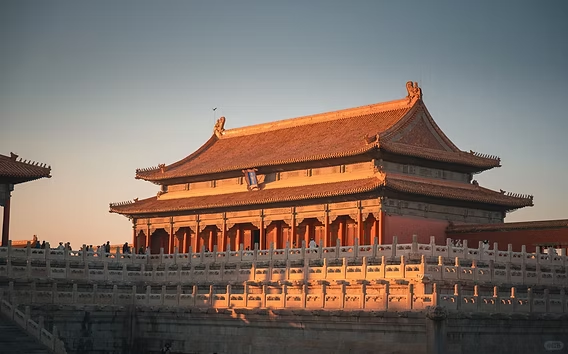
Den högsta harmonins sal
Tronsalen: historia, arkitektur och detaljer.
Läs →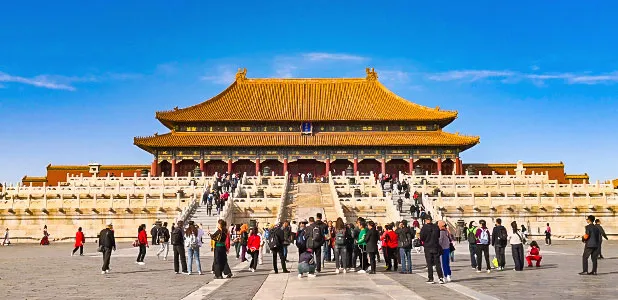
Kejserliga trädgården
12 000 m² fristad norr om palatset.
Läs →
Öppettider
Dagstider, sista insläpp och stängningsdagar.
Se tider →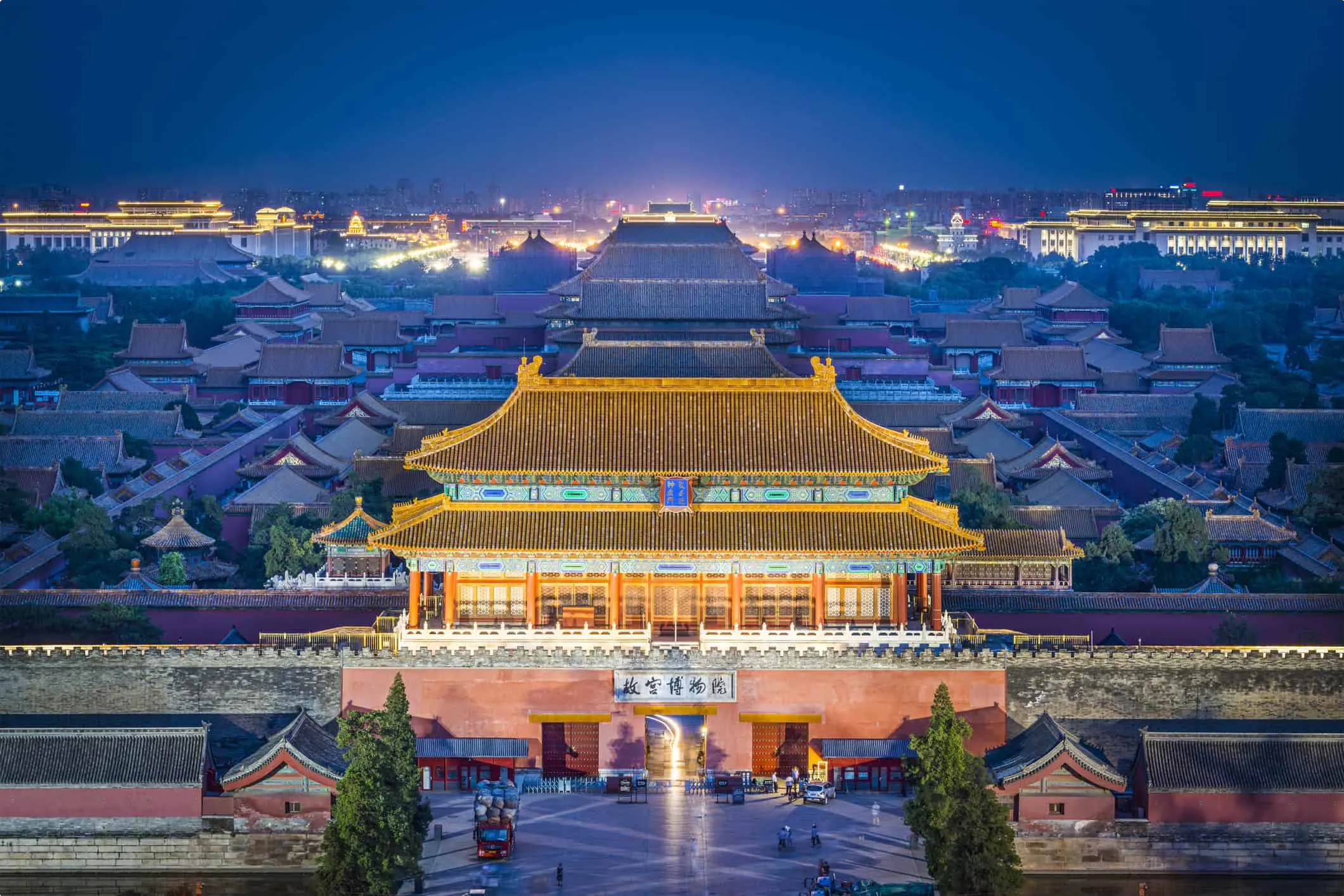
Inträdesavgifter
Jämförelse hög/låg och rabattregler.
Se →